

 News about the Technical University of Crete RSS feed

The Technical University of Crete, through the indigo research group, led by the Scientific Director, Vice Rector for Finance, Development and Technical Affairs, and Professor at the School of Production Engineering and Management, Georgios Arampatzis, and with the active participation of the International Centre for Advanced Mediterranean Agronomic Studies (CIHEAM), is at the heart of the Greek pilot implementation of the European AGRARIAN project.
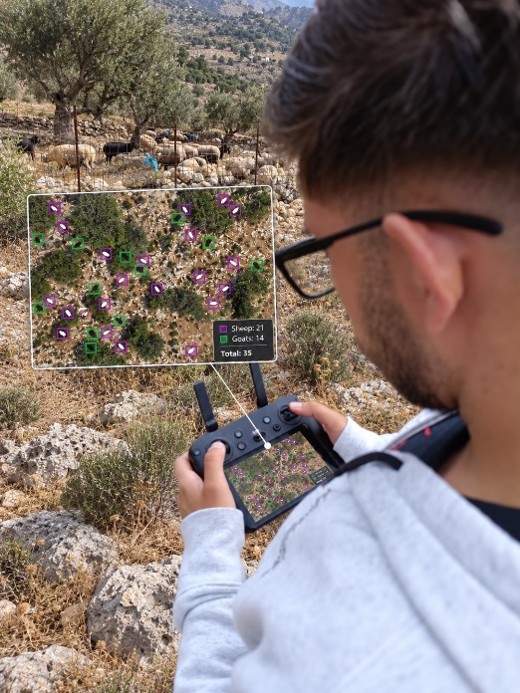
The application combines drones and Artificial Intelligence tools, with the aim of providing livestock farmers with a better overview of the location, movement and condition of their animals, even in mountainous and hard-to-reach areas, where the timely detection of an animal that has strayed, been injured or is displaying unusual behavior is not always easy.
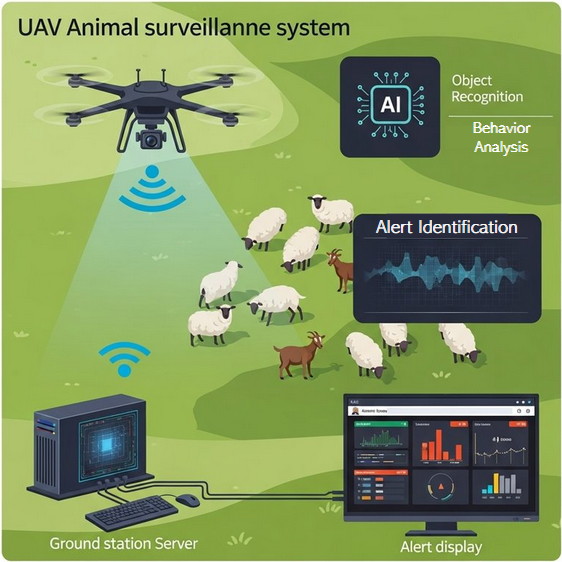
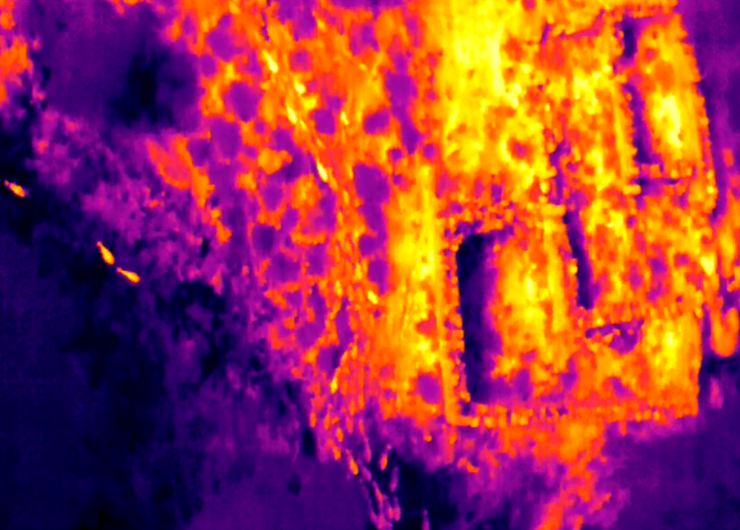
As part of the pilot implementation in Crete, drones fly over grazing areas and collect high-resolution images and data, providing valuable information for monitoring and managing the herd. Computer vision and Artificial Intelligence algorithms use this data to detect animals, monitor their movement and flag potential problems or hazardous situations. In this way, field images are transformed into useful information for the livestock farmer, helping them identify when and where their intervention is needed.
The idea for the pilot application emerged through an exchange of ideas between the indigo research group at the Technical University of Crete and researchers at the National Technical University of Athens. The participation of the International Centre for Advanced Mediterranean Agronomic Studies (CIHEAM) helped connect the research effort with the needs of local livestock farming. The starting point was not a technology in search of an application, but rather a genuine need identified among Crete’s livestock farmers.
The application has already been successfully tested in Crete, making it possible to assess what is useful and feasible in the everyday work of livestock farmers: better oversight of the herd, fewer unnecessary trips, and a faster response when an incident requiring attention occurs.
This initiative provides a tangible example of how the Technical University of Crete’s outward-looking approach, in partnership with local organizations such as the Mediterranean Agronomic Institute of Chania, and its collaboration with research institutions such as the National Technical University of Athens, can create solutions with development potential and value for Crete.
AGRARIAN is funded by the European Union’s Horizon Europe programme and is coordinated by the Institute of Informatics and Telecommunications of the National Centre for Scientific Research “Demokritos”.