 News about the Technical University of Crete RSS feed
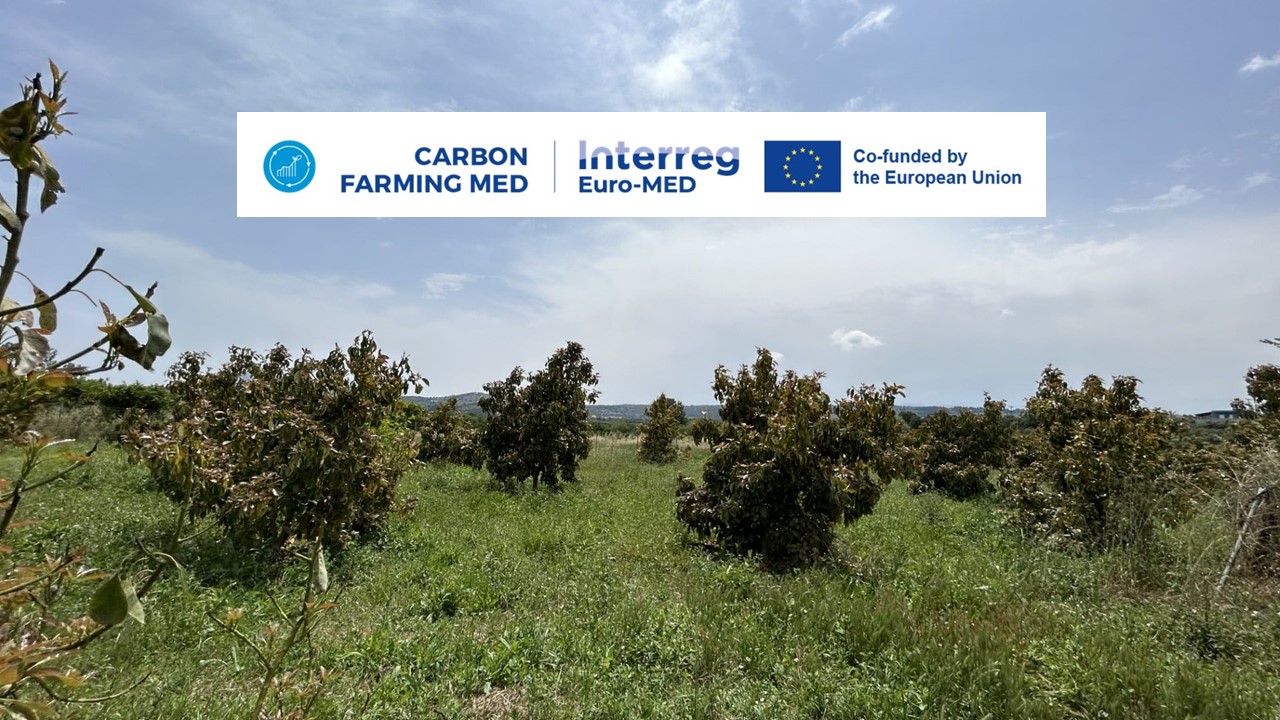

The Technical University of Crete (TUC) participates in the European project Carbon Farming MED with Professor Nikolaos Nikolaidis, Director of the Hydrogeochemical Engineering and Soil Remediation Laboratory at the School of Chemical and Environmental Engineering, as the Scientific Coordinator. The Carbon Farming MED project, co-funded by the Interreg Euro-MED Programme, is transforming agriculture into a climate solution through carbon farming and a new IT platform linking farm practices to a Mediterranean carbon credit market. The Mediterranean region is warming 20% faster than the global average, with heatwaves and droughts putting farming under significant pressure.
The Mediterranean is on the frontline of climate change. Average temperatures here are already about 1.5°C above pre-industrial levels, and the region is warming around 20% faster than the global average[1]. Longer heatwaves, harsher droughts, soil degradation, loss of biodiversity and growing pressure on harvests are putting agriculture and rural communities under increasing pressure. It is not enough to recognize these challenges — we must also act.
“The agricultural sector is a unique sector that not only produces, but also has the potential to reduce greenhouse gas emissions. This dual role makes it a key player in climate mitigation efforts, especially when land is managed holistically. One effective way to unlock this potential is through carbon farming — a set of practices that sequester atmospheric CO₂ in soils and biomass, while improving soil health, biodiversity, and water retention. It also offers farmers an attractive opportunity to earn additional income via the voluntary carbon market,” said Carlos Alberto, Coordinator of Carbon Farming MED project, a project co-funded by the Interreg Euro-MED Programme that is working to test, promote, and scale up these practices across the Mediterranean.
Carbon farming is based on clear principles and delivers powerful results in practice: healthy soils and landscapes act like sponges, storing carbon from the atmosphere while improving fertility and resilience. By adopting climate-smart practices, farmers can turn their land into part of the solution instead of the problem.
What sets Carbon Farming MED apart is its ability to connect the dots between local action and systemic change. The pilot farms serve as living laboratories, showing how regenerative practices work on the ground and generating evidence directly relevant for decision-makers. This evidence, together with ongoing research findings, is being translated into policy guidance. The project has already published its first policy briefing, which highlights how agroforestry as a carbon farming method delivers not only carbon storage but also biodiversity and ecosystem benefits. These results are being achieved within the Mediterranean context, where local climate, soils, and farming traditions help amplify the impact of carbon farming practices.
Building the research results and turning them into practical outcomes, the Carbon Farming MED consortium is designing and building an IT platform that will act as a central hub for knowledge and exchange. Its overarching goal is clear: creating a Mediterranean carbon credit market by establishing and promoting credits derived from regenerative agricultural practices. This integrated approach ensures that the project’s impact stretches from the soil beneath farmers’ feet to the highest levels of policy frameworks and market innovation.
According to Carlos Alberto, the project coordinator, the IT platform represents the next step in transforming knowledge into action. “Its real strength lies in making carbon farming both accessible and rewarding. The platform enables management of data from one or multiple plots to calculate greenhouse gas emissions from agricultural activities — such as fuel use, fertiliser application, and machinery operation — as well as the potential carbon sequestration achieved through improved practices. This allows farmers to estimate the carbon credits generated by each project and engage more effectively in the voluntary carbon market,” he explains.
Its promise is not only in its value as a climate solution, but also in its potential to generate financial benefits for farmers. For this to happen, knowledge must be easy to access, and the platform clear and understandable — turning ambition into real opportunities across the Mediterranean.
At national level, the Technical University of Crete is leading one of the project’s most impactful contributions: a new way to measure and maximise carbon storage in Mediterranean soils. The University has introduced the CAST model, a practical tool that helps assess how much carbon different sustainable farming practices can store in the soil — and what this means for farmers’ income. Early results show strong potential for Mediterranean agriculture. Over a 20-year period, farmers adopting climate-smart practices could generate between 6,260€ and 8,642€ per hectare in carbon credits. This provides a powerful financial incentive for farmers to transition to regenerative farming, improving soil health while boosting their income.
The CAST model also strengthens the reliability of carbon farming schemes by offering a solid basis for monitoring and verifying results over time. This is essential for building trust in carbon credits and ensuring that farmers are rewarded fairly for their efforts. The work of the Technical University of Crete directly supports the goals of Carbon Farming MED: creating a shared Mediterranean market for carbon credits, encouraging sustainable practices across borders, and contributing to Europe’s climate objectives for 2035.
Carbon Farming MED proves that Mediterranean farming can drive climate solutions — empowering farmers, restoring ecosystems, and guiding policies towards a sustainable future. It shows how Mediterranean farming can turn climate ambition into action.
For more information about the project, please visit:
https://carbonfarmingmed.interreg-euro-med.eu/
For press inquiries or additional information, please contact:
Nikolaos Nikolaidis, Professor, Technical University of Crete, nikolaos.nikolaidis@enveng.tuc.gr